Brain-computer interfaces · November 2026
Reading and writing the brain
What has already happened, what companies say will happen, and what hasn't happened yet. A map of the field and dossiers on the 18 companies I followed.
 By Kenneth Corrêa
What has already happened, what companies say will happen, and what hasn't happened yet. A map of the field and dossiers on the 18 companies I followed.
By Kenneth Corrêa
A brain-computer interface (BCI) connects brain activity to a computer. You will also see BMI (brain-machine interface), neuroprosthesis or neural engineering. The core idea: if you can read the attempt at a movement the body can no longer perform, you can deliver it somewhere else: a synthetic voice, a cursor, a robotic arm, the spinal cord below an injury.
Reading captures what comes out of the brain: the attempt to speak, grasp or walk. Writing sends a signal in: a letter on the retina, a touch on one finger. They are different technologies, and writing information is much harder than calming a circuit, which is what deep brain stimulation for Parkinson's does (more than 185,000 people treated by one manufacturer alone, according to Medtronic).
The strongest results so far fit into five verbs: speak (Casey Harrell, UC Davis, close to 2 million words spoken through the implant), grasp (cervical injury, China), walk (Gert-Jan Oskam, brain-spine bridge, EPFL), read (Sheila Irvine, PRIMA chip under the retina) and feel (Nathan Copeland, touch restored by stimulating the cortex). Nearly all are studies with one or a few people.
The signals were always there. What changed was the ability to decode them: neural networks that turn neuron spikes into sounds, language models that correct the words, and voices cloned from old recordings. In 2024, a speech system worked on its first day of use, after 30 minutes of calibration.
It is a ladder: the closer to the neuron, the sharper the signal and the higher the risk. The companies' six routes: needles in the tissue, film on the surface or above the dura, a blood vessel, the retina, ultrasound, and electrodes outside the skull.
The brain scars around the electrode, moves with every heartbeat and changes from one day to the next. Implants lose channels over the years. And there is business risk: when Second Sight stopped supporting its device in 2020, more than 350 people were left with a bionic eye that nobody could repair.
None of this is medical advice. Almost everything here is a clinical study, many with a single person, strict entry criteria and no guarantee that it will work for someone else. The exception is PRIMA, which is already authorized for sale in Europe for a specific type of macular degeneration.
One dossier per company, built only from public sources and updated on November 24, 2026. Company figures are kept separate from verified facts.












Because there are so few patients in the world, some of the best sources are the patients themselves, describing what they can do again. This is a starter list of people and publications with a public profile.


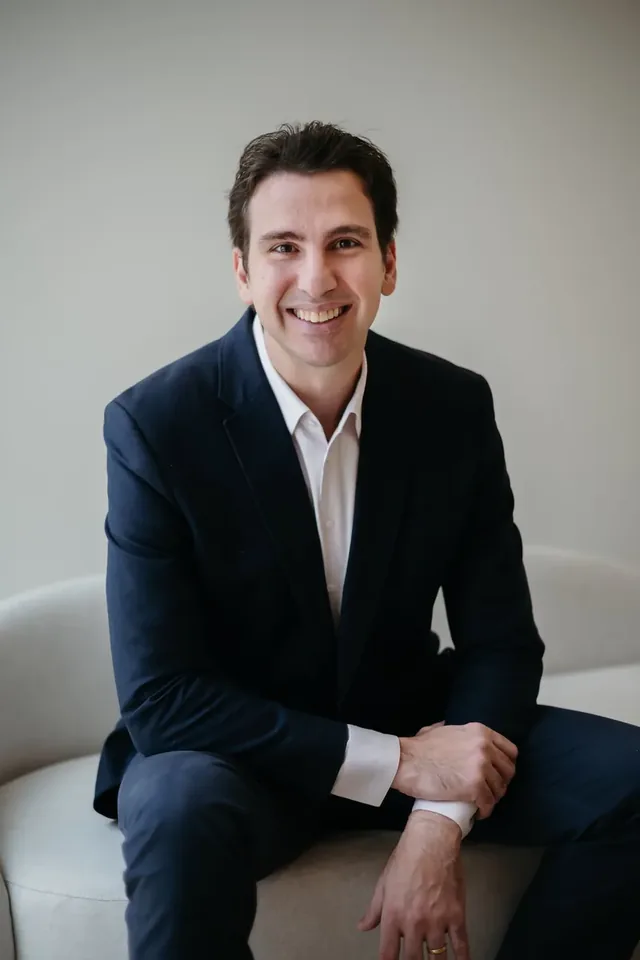
Kenneth Corrêa is an emerging technology and artificial intelligence strategist. He is the author of Cognitive Organizations (Editora Oeste, 2024), a book launched at MIT, Head of Strategy at 80 20 Marketing, CTO of MedGuias and a C-Level professor at FGV, Brazil's leading business school. He has given more than 150 keynotes and workshops, including two TEDx talks, and has trained teams at companies such as Disney, L'Oréal and Santander.
He is not a neuroscientist. For this project he spent months reading papers, clinical trial registries and company documents, visited labs, research centers, universities and neurotech startups in several countries, and spoke with scientists, executives, patients and caregivers. Everything published here comes from public sources.
More about Kenneth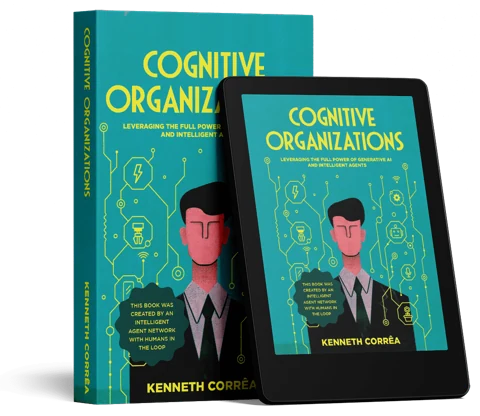
A cognitive organization combines human intelligence, generative artificial intelligence and networks of intelligent agents to transform processes, decisions and collaboration.
The link to this topic is direct: brain-computer interfaces only took off when AI began to decode signals that were always there. It is the same shift that is changing companies, applied to the human body.
Discover the book